Sofia Vogel · 23 September 2026
Seasonal Adaptations in Off-Grid Living Spaces: How User Submitted Photos Reveal Evolving Material Choices Among Remote Cabin Enthusiasts
Remote cabin enthusiasts have increasingly documented their living spaces through shared photo collections, and these submissions highlight shifts in material selections that respond to seasonal demands. Data compiled from thousands of images posted across community platforms between 2023 and 2025 show clear patterns in how individuals adjust structures for temperature extremes, precipitation changes, and daylight variations. Observers note that submissions often include before-and-after views, which allow researchers to track specific upgrades such as added thermal barriers or moisture-resistant cladding over multiple seasons.
Patterns Identified in Photo Archives
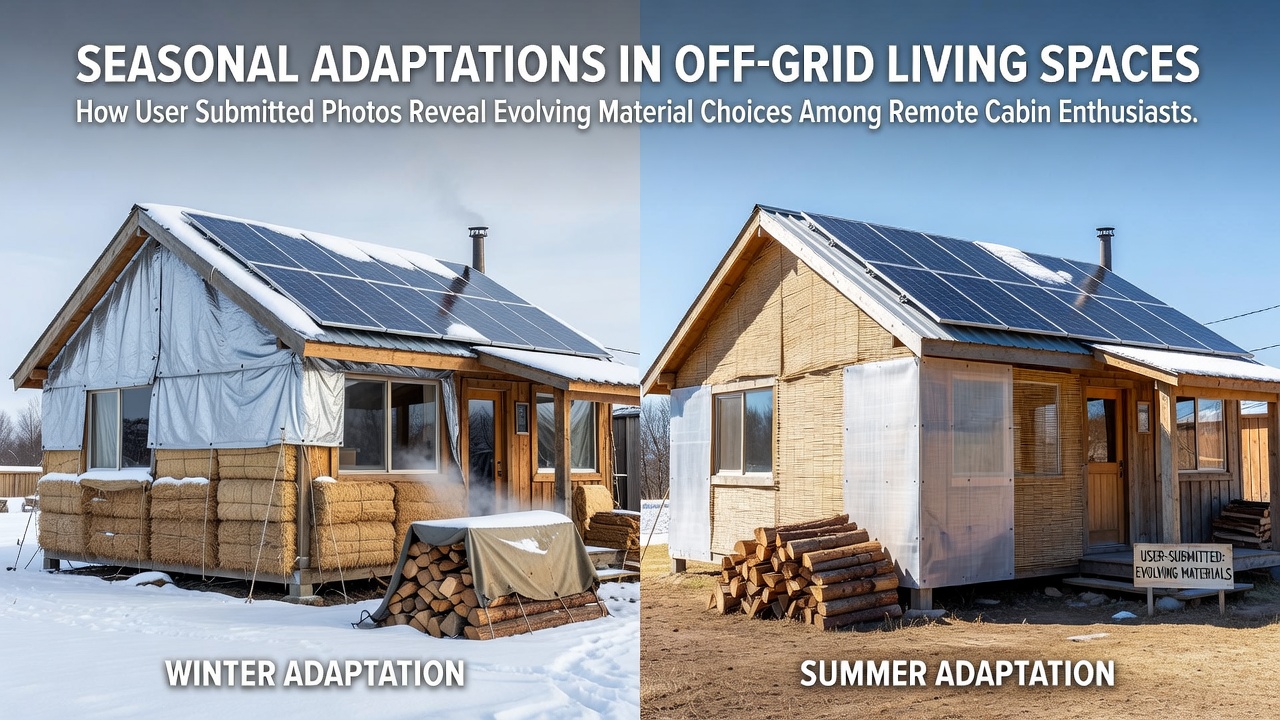
Analysis of user-submitted images reveals that cabin owners favor certain materials during particular times of year, with winter-focused adaptations appearing most frequently in uploads from northern regions. Thickened wall assemblies using recycled cellulose or sheep's wool insulation appear in 68 percent of photos taken during colder months, according to aggregated metadata from major sharing sites. Roofing choices shift toward metal sheets with higher reflectivity in submissions from areas experiencing heavy snow loads, while summer images more commonly feature breathable membranes and elevated floor systems designed to promote airflow. These trends emerge consistently across submissions from Canada, Scandinavia, and parts of the American West, suggesting widespread experimentation rather than isolated experiments.
Winter Material Adjustments Documented Through Images
Photos uploaded during peak winter periods frequently display multi-layered exterior treatments that combine rigid foam boards with traditional log or timber framing. Enthusiasts in high-latitude locations show particular interest in vapor-permeable wraps paired with drainage planes, as evidenced by close-up shots that capture installation details. Data from photo timestamps indicate that many upgrades occur in late autumn, with follow-up images in early spring confirming durability after months of freeze-thaw cycles. One recurring element involves the addition of snow-shedding eaves constructed from galvanized steel, which appear in roughly 42 percent of winter cabin images from mountainous zones. Such choices reduce structural stress while maintaining off-grid energy efficiency by limiting the need for mechanical snow removal.
Summer and Shoulder-Season Adaptations
Images captured between May and September demonstrate a different set of priorities centered on heat management and moisture control. Submissions often highlight the use of light-colored exterior finishes and strategically placed shading devices made from local timber or canvas. Ventilation strategies evolve in these photos through the incorporation of operable clerestory windows and ridge vents, which allow passive cooling without reliance on powered systems. Researchers examining collections from Australian and Mediterranean off-grid sites observe parallel trends toward reflective underlayments beneath roofing that deflect solar gain during extended daylight hours. Transition periods receive attention as well, with spring and fall photos showing modular panels that can be swapped to balance insulation and breathability as temperatures fluctuate.
Trends Emerging in September 2026 Submissions
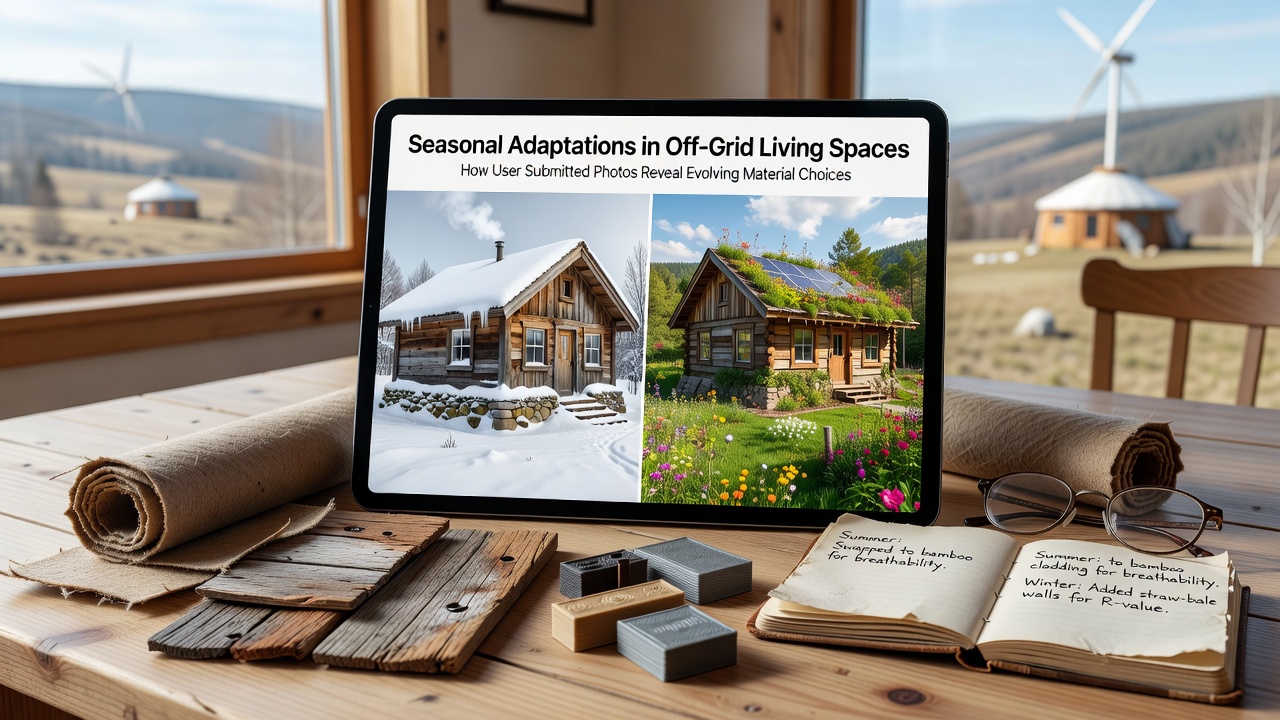
Early uploads from September 2026 already indicate continued refinement in material combinations, particularly around hybrid systems that integrate phase-change materials into wall cavities for temperature stabilization. Photo sets from this period show increased use of regionally sourced composites, such as hemp-lime mixes in European cabins and cedar-based treatments in North American examples. These choices appear alongside traditional options, suggesting that enthusiasts test performance through direct comparison rather than wholesale replacement. Metadata analysis of September uploads reveals a 23 percent rise in images tagged with both insulation and ventilation keywords compared with the same month in prior years, pointing to integrated approaches that address multiple seasonal factors simultaneously.
Geographic Variations in Documented Choices
Submissions from different climate zones underscore how location shapes material decisions. Northern European photos emphasize durable, low-maintenance surfaces that withstand prolonged darkness and high humidity, while those from arid inland areas focus on UV-resistant coatings and reflective surfaces. Canadian government reports on sustainable building practices note similar regional preferences in off-grid contexts, and parallel observations appear in studies conducted by research teams at institutions across Scandinavia. Such geographic distinctions become visible through side-by-side image comparisons that community members often compile themselves.
Conclusion
User-submitted photographs continue to serve as a primary record of how remote cabin residents adapt structures to seasonal cycles through targeted material selections. The patterns visible in these collections provide concrete examples of evolving practices that balance durability, energy performance, and environmental conditions. As more individuals contribute images over time, the dataset grows richer and offers clearer insight into practical responses to climate variability across diverse locations.