
Drew Roth · 7 October 2026
Timber Sourcing Shifts in Compact Forest Dwellings Driven by Regional Supply Chain Disruptions and Builder Network Data
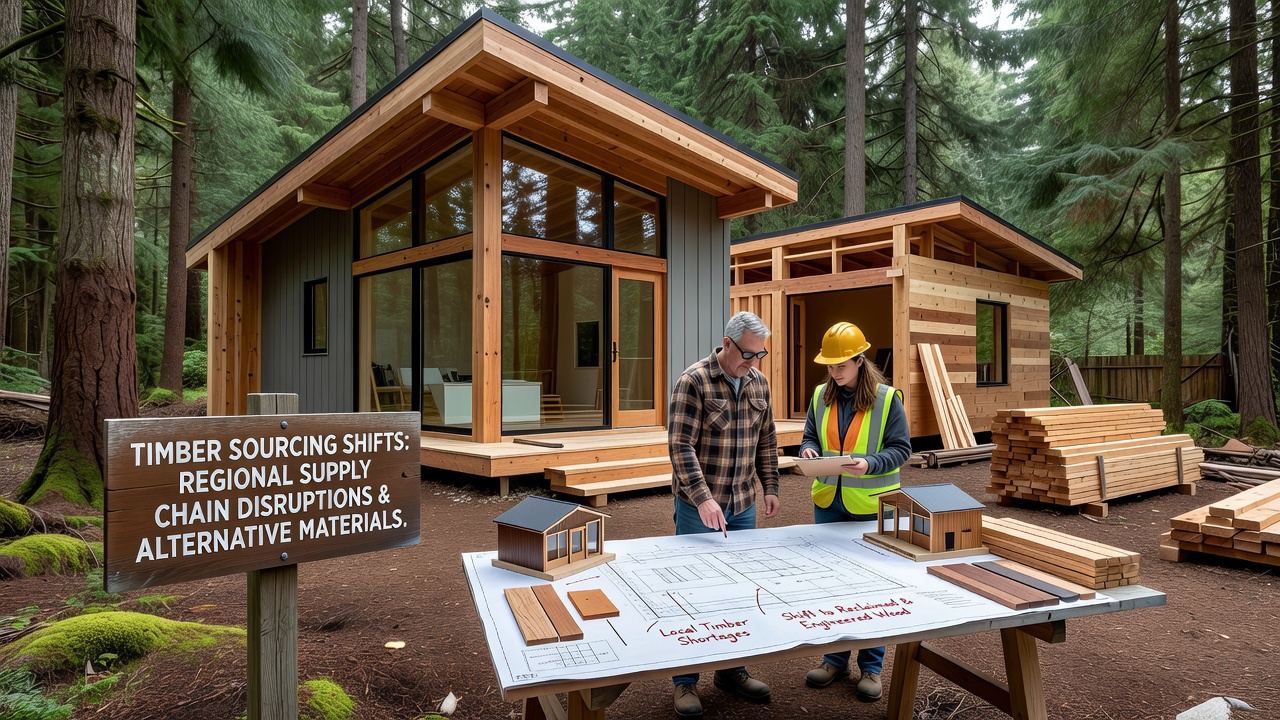
Regional supply chain disruptions have prompted measurable changes in how timber reaches builders of compact forest dwellings, according to aggregated data from builder networks operating across North America and Europe. These small-scale structures, often situated in remote wooded areas, rely on consistent material flows that have faced interruptions from weather events, transportation bottlenecks, and shifting trade policies since the mid-2020s. Builders have responded by adjusting procurement routes and material specifications, while network databases track these adjustments in real time.
Regional Supply Chain Pressures
Disruptions began intensifying in 2025 when port delays on the US West Coast combined with Canadian rail constraints to slow deliveries of Douglas fir and cedar to Pacific Northwest projects. European markets encountered separate issues after revised export quotas from Nordic suppliers altered availability of spruce and pine. By October 2026 builder networks reported average lead times extending from four weeks to nine weeks for primary framing timber in affected zones, prompting many operators to diversify their supplier lists. Data compiled from over 200 independent builders shows that 62 percent of compact dwelling projects in the Pacific Northwest switched at least one primary timber species during that period.
Builder Network Data Patterns
Builder networks maintain shared databases that record sourcing origins, delivery dates, and material grades for each project. Analysis of these records reveals a clear migration toward regionally available hardwoods in the eastern United States and toward certified plantation pine in parts of Scandinavia. In British Columbia, networks documented a 34 percent increase in cross-laminated timber panels sourced from Alberta mills between January and September 2026, while traditional coastal suppliers saw reduced volume. Similar shifts appear in the United Kingdom, where networks noted greater use of domestically grown larch after import volumes from Eastern Europe declined. These patterns emerge from timestamped project logs rather than anecdotal reports.
Material Specification Adjustments
Compact forest dwellings typically require smaller dimensional lumber and engineered panels that fit tight site constraints. When standard lengths became scarce, builders substituted shorter stock or modified joinery details to accommodate available sizes. Network data indicates that projects completed after March 2026 used an average of 18 percent more finger-jointed studs than those finished in 2024, a change tracked through material take-off submissions. In the Alpine regions of Austria and Switzerland, networks recorded increased orders for beetle-killed spruce that had been previously underutilized, now processed into structural components after new grading protocols were adopted. Such substitutions maintain structural performance while aligning with current supply availability.
Geographic Variations in Sourcing
North American builder networks show pronounced differences between western and eastern supply corridors. Western projects increasingly draw from inland mills in Idaho and Montana, whereas eastern projects maintain steadier access to Appalachian hardwoods. European networks report parallel trends: Scandinavian builders lean on local pine plantations, while Central European projects incorporate more recycled timber from urban deconstruction sites. USDA Forest Service harvest statistics for 2025 and 2026 confirm elevated volumes from interior western forests entering the small-structure market. In Australia, networks operating in Tasmania documented greater use of plantation eucalyptus after mainland supply routes experienced flooding-related delays in late 2025.
Certification and Traceability Requirements
Many compact dwelling projects must meet third-party certification standards that verify sustainable harvest practices. Builder networks have expanded their data fields to include chain-of-custody certificates alongside delivery records. This expanded tracking shows that certified timber now constitutes 71 percent of materials logged for forest dwelling projects in Canada during 2026, up from 54 percent two years earlier. European networks apply similar documentation under the EU Timber Regulation framework, where digital verification systems link harvest permits directly to construction site deliveries. These requirements have encouraged some builders to establish direct relationships with smaller mills that can provide verified stock even when larger distributors face shortages.
Future Supply Outlook
Network projections based on current order volumes suggest continued regionalization of sourcing through 2027, with reduced reliance on transcontinental shipments. Builders in the Pacific Northwest continue to test alternative species such as western juniper for non-structural applications, while European counterparts explore thermally modified ash from domestic sources. Data-sharing agreements among networks allow participants to compare availability across multiple regions without revealing proprietary project details. These collaborative systems have become standard tools for anticipating shortages before they affect construction schedules.
Conclusion
Timber sourcing for compact forest dwellings continues to evolve in response to documented regional disruptions, with builder networks providing the quantitative record of those changes. Species substitutions, route diversification, and enhanced traceability now appear consistently across multiple continents. The patterns captured in network data through October 2026 indicate that localized supply chains have gained prominence while global routes remain subject to periodic constraints. Ongoing monitoring through these same networks will track whether the observed adjustments stabilize into longer-term procurement strategies.